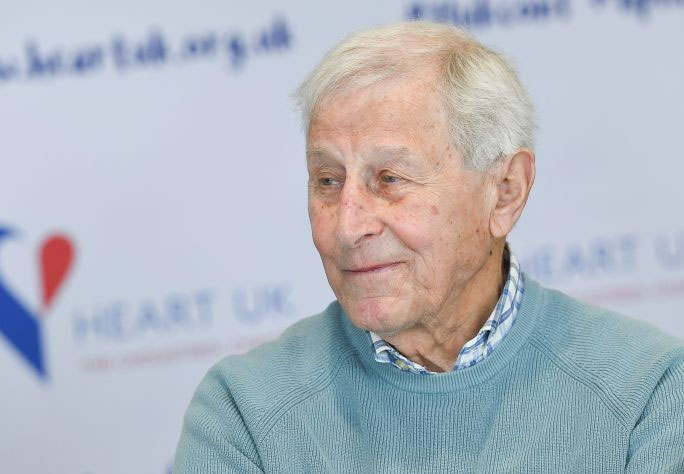
Obit courtesy of Dr Jai Cegla (Imperial College London)
The British Atherosclerosis Society are deeply sorry to announce the death of Professor Gil Thompson, our former Chair, who died on 9 January 2026, aged 93. He was a pioneering physician and scientist, whose research informed understanding of the role that cholesterol plays in atherosclerosis, particularly impacting the lives of people with inherited lipid disorders.
He joined Hammersmith Hospital in London in 1963 and remained closely associated with it throughout his career. Along the way, he also worked at leading medical centres in the United States and Canada. Although he began his career in gastroenterology, he later made a bold shift into the then-controversial field of lipid research. Over time, he became one of the world’s leading experts, eventually serving as Professor of Clinical Lipidology at Imperial College London.
Professor Thompson played a crucial role in showing how “bad” cholesterol (LDL cholesterol) is processed in the body and how faults in this process lead to dangerously high cholesterol levels and early heart disease. His research helped settle long-running debates by providing clear evidence that high LDL cholesterol directly causes atherosclerosis—the narrowing of arteries that leads to heart attacks and strokes. This work underpinned today’s widely accepted approach to cholesterol treatment.
Equally important was his dedication to patients. As Lead of the Lipid Clinic at Hammersmith Hospital, he was a pioneer of LDL apheresis, a life-saving treatment that physically removes cholesterol from the blood. This therapy was especially important for people with Homozygous Familial Hypercholesterolaemia (HoFH), a rare inherited condition that often does not respond adequately to medication alone. His careful studies showed that this demanding treatment could significantly improve survival, and his work helped establish when and how it should be used.
Over his career, Professor Thompson published more than 300 scientific papers and contributed to major medical guidelines well into his nineties. He also played a leading role in professional organisations, including and beyond the British Atherosclerosis Society, and received many honours recognising his outstanding contributions to cardiovascular medicine.
As a teacher and mentor, he was widely admired for his generosity, clarity of thought and commitment to evidence. He remained actively engaged in clinical discussions and medical literature until his final weeks. Outside medicine, he enjoyed fly-fishing, long-distance running and travel.
Professor Thompson’s career spanned a transformative period in cardiovascular medicine. He is remembered not only for rigorous science, but for compassion, integrity and a lifelong commitment to improving patient care.
The epigraph of Professor Thompson’s Handbook of Hyperlipidaemia includes an inspirational quotation whose closing lines, from Robert Frost’s poem “The Road Not Taken,” remain especially fitting:
“Two roads diverged in a wood, and I took the one less travelled by, And that has made all the difference.”
Few lines better capture Professor Thompson’s willingness to pursue a path that was once uncertain and challenging. And truly, what a difference lipoprotein apheresis has made in the lives of people with Homozygous Familial Hypercholesterolaemia—buying vital time, preserving life and hope, before newer generations of lipid-lowering therapies became available.